Permits & NOCs · Villas and townhouses
Villa renovation, extension and modification approvals
Extending a villa, opening up a layout, adding a pergola or reworking the façade usually needs two approvals: the master developer's NOC and a building permit from the authority for your area. We plan both together so the works can start legally and finish with a completion certificate.
- Extensions
- Internal layout changes
- Façade & roof works
- Pergolas, shades & boundary walls
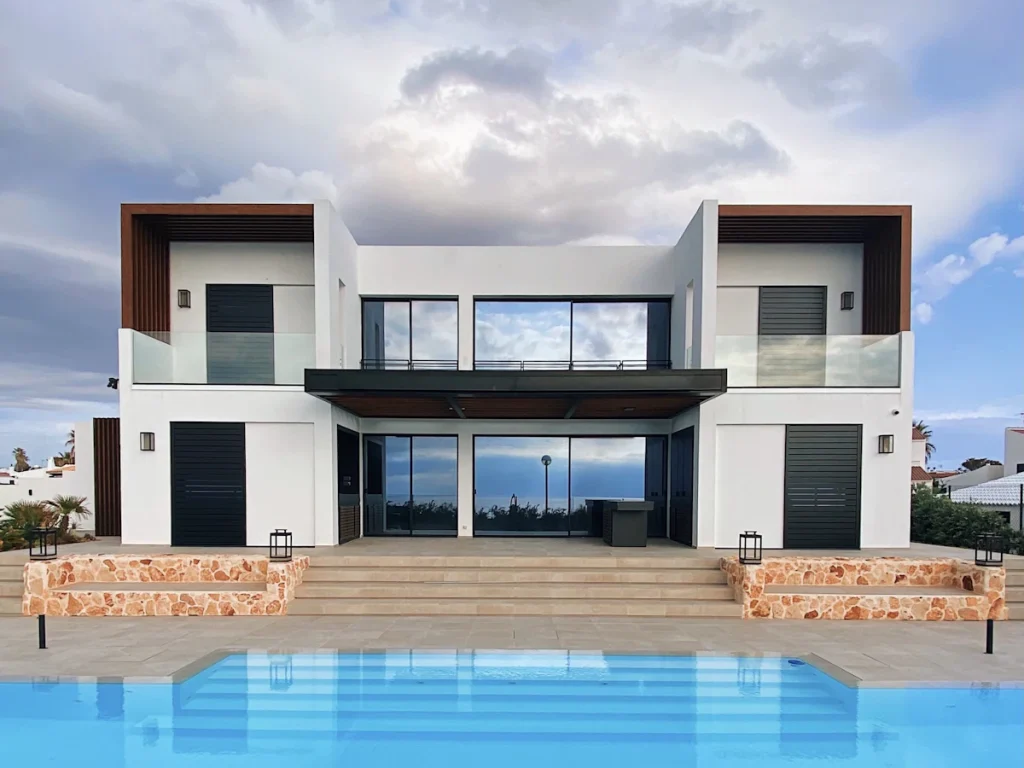
Illustrative image
Most villa owners in Dubai find out about approvals in one of two ways: before the works, when they ask a contractor for a quote, or after, when a buyer, the developer or an inspector asks for the permit. The first is far cheaper.
The approval route for a villa project depends on what you are changing and where the villa is. A new kitchen layout in an Emaar community and a ground-floor extension on a Nakheel frond don't follow the same path. Different developers have their own guidelines, and the building-permit authority can differ too. This page explains how the pieces fit, so you can plan the works, budget and timeline realistically.
Which villa works need approval?
Dubai's construction law (Local Order No. 3 of 1999) requires a permit for construction works. Its definition includes additions, modifications, demolition and maintenance. Master developers add community guidelines on top, and most require their NOC before any alteration. In practice, works fall into three broad groups:
| Type of work | Typical examples | Usual approvals |
|---|---|---|
| Extension | New room, enclosed terrace, extra floor, maid's room, garage conversion that adds built-up area | Developer NOC + building permit for additions, structural design, completion certificate |
| Modification | Removing or moving walls, new openings, façade changes, roof works, staircase changes | Developer NOC + modification permit. Structural input wherever loads change. |
| External additions | Pergolas, shades, boundary walls, gates, outdoor kitchens, swimming pools, hardscape | Developer NOC to community guidelines. Pools and some structures also need a permit. |
| Cosmetic refresh | Painting, like-for-like replacement of finishes and fittings | Often lighter or no approval, but check your developer's rules and the access or work-permit requirements |
Be careful with "cosmetic": changes that look minor can be treated as modifications. Examples are a new window, a widened opening, a changed exterior colour or a kitchen move that reroutes drainage. If in doubt, confirm before you instruct a contractor.
Two layers of approval: developer NOC and building permit
Villas in master-planned communities sit under two sets of rules.
1. Master developer NOC
The developer checks the proposal against the community's design guidelines: appearance, height, setbacks, materials, boundary treatments and the effect on neighbours. Nakheel issues modification NOCs through its Urban Planning team, requested on the Nakheel website or the My Nakheel app. Emaar takes home modification requests through its community portal.
2. Authority building permit
The permit authority reviews the technical design: structure, safety, services and code compliance. For many mainland communities this is Dubai Municipality. In areas under the Ports, Customs and Free Zone Corporation, which include many Nakheel developments, it is usually Trakhees. In DDA zones it is the Dubai Development Authority.
The developer NOC normally comes first, because the authority expects it as part of the permit application. We confirm the correct authority for your plot at the start. Jurisdiction can differ even between neighbouring communities.
Townhouses and semi-detached homes
Townhouses add a third consideration: the shared structure. Removing a wall that sits on a party line, raising a roof level or extending towards a neighbour's garden affects more than one owner, and developers look closely at these proposals. Where a townhouse is part of a jointly owned development, Dubai's jointly owned property law (Law No. 6 of 2019) requires approval from the master developer, the Dubai Land Department and the competent authority for substantial changes to the structure or external appearance. We check which regime applies to your home before design starts, and design party-wall and roofline changes so they don't load or overlook the neighbouring unit.
Who is involved and who is responsible
- The owner provides title deed, ID and consent, signs the appointment of consultant and contractor, and pays developer and authority fees. The owner remains responsible for unauthorised works on the property.
- The engineering consultant designs the works, prepares the drawings and submits the permit application. In Dubai, consultancy offices must be licensed and registered with Dubai Municipality.
- The contractor must be licensed for the work and is named on the permit. Some authorities ask for an appointment letter signed by owner, consultant and contractor.
- The developer and authority review, inspect and issue the NOC, permit and completion certificate.
Documents and drawings to prepare
- Title deed & owner IDPlus a power of attorney if a representative applies.
- Existing drawingsThe approved drawings for the villa as built. If they are missing or don't match the site, an as-built survey is needed first.
- Proposed drawingsPlans, elevations and sections that clearly show existing, demolished and new elements.
- Structural designCalculations and drawings for new elements, and an evaluation of the existing structure when loads change.
- MEP drawingsWhere electrical loads, drainage, water or air-conditioning change.
- 3D views or material samplesOften requested by developers for façade, colour and landscape changes.
- Developer NOCThe signed no-objection, with any conditions.
- Contractor documentsTrade licence and authority registration of the appointed contractor.
Step-by-step: from idea to completion certificate
Site visit and feasibility
We review what you want against your plot's setbacks, coverage and community guidelines, and check whether the existing drawings match the villa.
You + our team
Concept and developer submission
A concept design is developed and submitted to the master developer with the supporting documents. Developer comments are resolved before detailed design is finalised.
Consultant · developer
Detailed design and permit application
Architectural, structural and MEP drawings are completed and submitted to the permit authority with the developer NOC.
Registered consultant
Review and comments
The authority, and service authorities where relevant, review the package. Comments are answered with revised drawings.
Authority · consultant
Permit, works and inspections
Once the permit is issued, the contractor mobilises and the authority inspects at the required stages. The developer may also require work permits and site rules such as working hours and hoarding.
Contractor · inspectors
Completion
Final inspection leads to the completion certificate and closure of the developer's file. Keep the approved drawings with your property documents. You will need them when you sell.
Authority · developer
What affects cost and timing
We don't quote developer or authority fees as fixed numbers, because they depend on the community, the area added and the type of work, and they are revised from time to time. When we quote, we list the expected authority and developer fees separately from our own consultancy fee. The main factors are:
- Added built-up area. Some fees are charged by area. For example, the Dubai Development Authority publishes a per-square-foot rate for added area in its zones.
- Structural content. Extensions and wall removals need structural design and sometimes an assessment of the existing building.
- Number of parties. Pools, new electrical loads and changes near roads or utilities bring in more reviewers.
- Developer review rounds. Proposals that follow the community guidelines closely pass faster.
- Quality of existing records. Missing approved drawings, or earlier unapproved changes, add an as-built and regularisation step.
Common problems and how to avoid them
- Getting a contractor's quote before checking approvals. The design may need to change to comply, and so will the quote.
- Inheriting a previous owner's unapproved works. Extensions done without permits can hold up your new application until they are regularised.
- Ignoring the neighbours' side. Developers look closely at privacy, overlooking, boundary walls and drainage towards neighbouring plots.
- Starting works on a developer NOC alone. A developer NOC is not a building permit. Under Local Order No. 3 of 1999, unpermitted construction can bring fines of up to AED 50,000 (doubled for repeats), remedial costs and blocks on utilities or future permits.
- Letting approvals expire. NOCs and permits have validity periods. Plan the contractor's programme so works start in time.
How we support villa owners
- Feasibility advice before you commit to a design or a contractor
- Design or review of extension and modification drawings to the community guidelines and the Dubai Building Code
- Preparation and follow-up of the developer NOC application
- Coordination of the building permit submission through a registered consultant
- Inspection coordination and completion certificate
- As-built drawings and regularisation where earlier works were not approved
Villa renovation approval FAQs
Do I need approval to renovate the inside of my villa?
Purely cosmetic work such as painting or like-for-like replacement is usually treated lightly, but developers' rules vary. Removing or moving walls, changing wet areas, or anything structural or affecting services normally needs a developer NOC and a modification permit. Check before work starts.
Is the developer NOC enough to start work?
No. The developer NOC confirms the master developer has no objection under its community rules. A building permit from the relevant authority is still needed for construction works such as extensions and modifications.
Which authority issues the permit for my villa?
It depends on the community. Many mainland communities fall under Dubai Municipality. Many Nakheel developments fall under Trakhees. DDA zones have their own process. We confirm this for your specific plot before design starts.
A previous owner extended the villa without approval. What can I do?
The usual route is an as-built survey, then a regularisation application to the developer and the authority. Sometimes remedial works are needed. Tell us what was changed and we will assess the options.
Can you guarantee approval?
No one can honestly guarantee approval. The decision belongs to the developer and the authority. What we can do is make sure your application is complete, compliant and well presented, which avoids the most common causes of delay.
Villa community guides
Rules and authorities differ by area. These guides cover what applies in each community.
On this page
Planning villa works?
Send your community name and a short description, or photos of what you want to change. We will outline the approvals before you commit.
Related services and guides
Guide
Villa renovation NOC in Dubai: step by step
List every proposed change, including alterations that seem minor compared with the main renovation.
Read more
Guide
Villa extension and modification approval
The desire for another room does not establish how much additional area a plot can accommodate.
Read more
Guide
Emaar NOC for villa renovation and fit-out
Emaar Community Management provides a home-modification process.
Read more
Guide
Nakheel approval and NOC for Palm and communities
A property-modification project can involve several permissions with different purposes.
Read more
Service
Dubai Municipality Approval (DM Approval)
Get support for Dubai Municipality approval: drawings, NOCs, permits, submissions and completion coordination. Check the approval route for your project.
Read more
Service
Nakheel NOC support in Dubai
Organise the developer consent and project documentation for modifications in an applicable Nakheel property. We help you describe the work clearly and distinguish community permissions from technical authority approvals.
Read more
Service
Emaar Approval Dubai
Emaar NOC support for villa renovations, extensions, apartment changes and commercial fit-outs in Dubai. Discuss drawings, documents and approval requirements.
Read more
Service
As-built drawings and regularisation in Dubai
Record the property as it exists and identify differences from available approval records. We help organise measured information and the technical review needed to discuss a regularisation route.
Read more
Service
Approvals on Palm Jumeirah
Planning works on Palm Jumeirah? How the Nakheel NOC and the building permit fit together for villas, apartments and fit-outs, with documents and practical tips.
Read more
Tell us about your project
Share a few details and we will tell you which approvals apply, what documents you need and how we can help. There is no obligation.
- A practical answer on which authority and NOCs apply
- A clear list of the documents and drawings to prepare
- A written scope and quotation for our consultancy work