
Authority guides
Before you change a villa, townhouse or apartment in an Emaar community, you need Emaar's home modification NOC, and your contractor needs a work permit to get through the gate. Here is how both work, from the portal to completion.
An Emaar NOC is the home modification approval that Emaar Community Management issues before you change a villa, townhouse or apartment in an Emaar community. You apply through your community portal under Home Modifications, upload drawings and documents, and once the NOC is approved your contractor uses its reference number to get an ECM work permit. Extensions, pools and structural changes also need a Dubai Municipality or DDA permit.
This guide comes from the DXB Approval Team. We prepare drawings and documents for Emaar NOC applications, submit them for homeowners and contractors, and coordinate the authority permits that some works need. Emaar and the relevant authority make every decision, so treat the figures below as our planning estimates and always follow the conditions written on your own NOC.
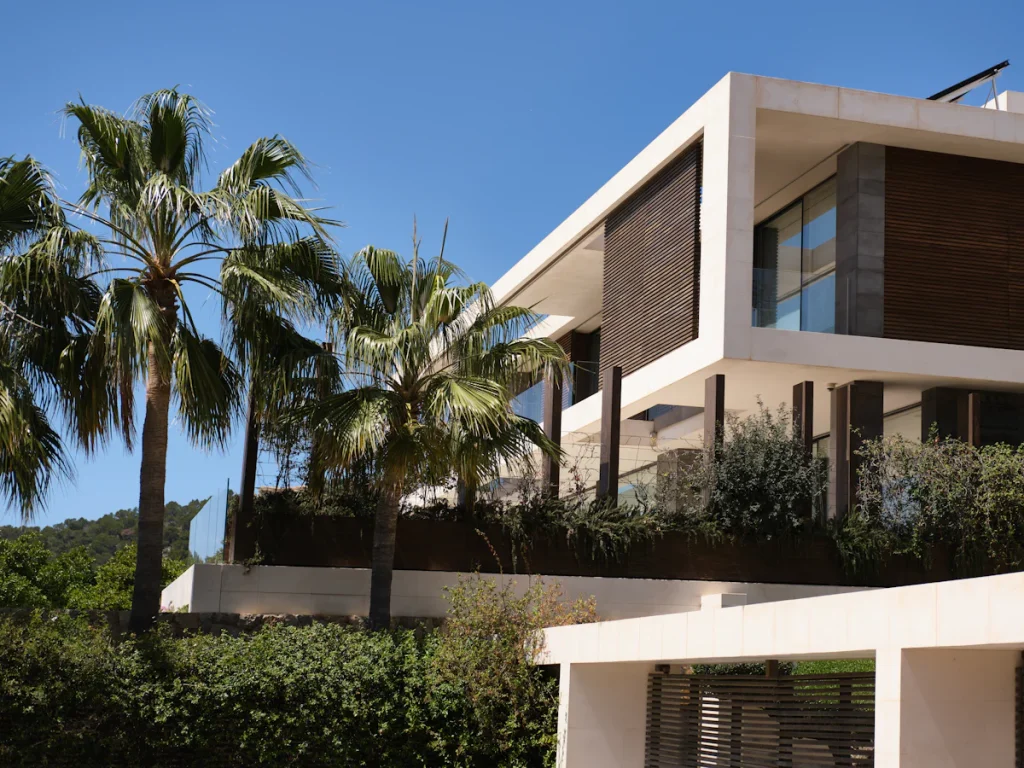
An Emaar NOC, formally the Emaar home modification NOC, is Emaar's written no objection to a specific change at a specific property. It confirms that the design fits the community guidelines: elevations, colours, materials, setbacks and the effect on neighbours and shared areas.
It applies across Emaar communities, from villa areas such as Arabian Ranches, The Springs, The Meadows and Emirates Hills to apartment towers. It is not a building permit. Emaar checks the work against its own rules, while Dubai Municipality or the DDA check structure, safety and building regulations. Many works need both.
The application route is broadly the same in every community, but the design rules are not. A pergola that suits a large villa plot may be refused on a townhouse. Our article on how Emaar's modification rules differ by community covers those differences. This guide focuses on the process itself.
Emaar treats minor items such as internal painting, furniture, electrical fixtures and regular maintenance as allowed without an NOC. The contractor still needs an entry permit to reach your home, though. Almost anything that changes the layout, structure, services or outside of the property needs an NOC. Emaar's own resident guidance says to apply even for a kitchen renovation.
| Work | Emaar NOC | ECM contractor permit | Authority permit too? |
|---|---|---|---|
| Interior painting, AC servicing, plumbing or carpentry repairs | Not needed | Short-term or long-term permit | No |
| Kitchen remodelling or bathroom refit | Yes | Home modification permit | Usually not, unless structure or main services change |
| Moving or removing internal walls | Yes | Home modification permit | Yes if the wall is structural |
| External painting or a colour change | Yes | Home modification permit | No |
| Pergola, shade structure or planter boxes | Yes | Home modification permit | Often, for fixed structures |
| Boundary wall, side gate or fence | Yes | Home modification permit | Depends on height and construction |
| Swimming pool | Yes | Home modification permit | Yes |
| Extension or added built-up area | Yes, where the community allows it | Home modification permit | Yes |
| Apartment fit-out | Yes | Home modification permit | Depends on scope |
Some items have their own detail. Shade structures are covered in our pergola approval guide, and walls, gates and fences in our guide to boundary wall approval in Dubai. Before you plan added space, read about whether a villa extension is feasible, because not every house type allows one.
For an Emaar apartment NOC, the limits are tighter. Emaar does not allow external changes that alter the appearance of an apartment building, and balcony changes must follow the community's home modification guidelines. Our apartment renovation NOC guide explains how building management fits in.
The portal shows the exact list for your application, and it varies with the community and the scope. As a starting point, prepare the following.
Documents
Drawings
Most returns come from the drawings rather than the forms, so this is where time is best spent.
The full route from the community portal to completion usually runs like this.
These are our estimates for planning, and the final amounts depend on the project and the community.
The area fee changes the sums for extensions. At that rate, adding 150 sq ft would carry an area fee of AED 150,000 on top of design and construction, so it is worth costing before you commit to a design.
Authority permits are separate. Many Emaar villa communities fall under Dubai Municipality, where we estimate 3 to 7 working days and AED 300 to 1,500; our Dubai Municipality approvals service covers that side. In Dubai Hills Estate, building permits usually go to the DDA, where we estimate 7 to 15 working days and AED 1,020 to 3,000. We confirm the authority for each plot before submission.
The NOC approves the design. The Emaar work permit, also called the ECM permit or Emaar permit to work, lets the contractor's staff and vehicles into the community to build it. Without a valid digital permit, community security will not let them in.
Who applies. The contractor, not the homeowner. The company registers on the ECM contractors portal with its trade licence and the manager's and representative's passport copies, then registers its staff and vehicles. Staff must be on the company's visa.
The NOC reference. When the home modification NOC is approved, the contractor receives an email with a unique reference number. That number is entered when applying for the home modification permit, so the permit cannot come before the NOC.
Permit types. ECM offers three:
The digital permit. Allow about one business day for approval. The permit is issued digitally with a QR code, and security scans it at the gate.
Working hours. The contractors portal sets access from around 8am to 5pm or 5.30pm, with no work on public holidays, and asks that noisy work is avoided between 1pm and 3pm. The portal's pages differ on the weekly day off, so confirm the current days with your community security office before planning the programme.
Owners often confuse these three, and each has its own application.
| Emaar NOC | ECM work permit | Move-in or move-out permit | |
|---|---|---|---|
| What it covers | The design of the modification | Contractor staff and vehicle access | Bringing furniture in or out |
| Who applies | Owner, or someone the owner authorises | The registered contractor | Owner or tenant |
| Where | Community portal, Home Modifications | ECM contractors portal | Community portal |
| When | Before any work starts | After the NOC, before work starts | Around the moving day |
Moving into a home after a renovation needs its own permit. Our guide to Emaar move-in and move-out permits covers that step.
When the works finish, the contractor clears the site and removes all waste, which is a condition of the entry permit. The community team may inspect the finished work against the approved drawings, and the authority may inspect too where a permit was issued.
The AED 10,000 security deposit is refundable. If the inspection finds work that was not approved, or damage to shared areas, the refund is normally held until the issue is put right. Keep the approved drawings on site and avoid changes during construction that were not in the NOC.
Each return adds another review cycle, so a complete first submission is the quickest route to approval.
If you are planning a renovation, extension or fit-out in an Emaar community, send us your unit or plot number and a short description of the works. We will tell you which approvals apply, prepare the drawings and handle the NOC and any authority permit. For larger villa projects, our villa renovation permits service brings the drawings and approvals together. You can also see how our Emaar approval consultants manage the whole file, or contact the DXB Approval Team for a quote.
We estimate 3 to 5 working days once a complete application is in. Comments and resubmissions add time, and any DM or DDA permit runs on its own timeline after the NOC.
Usually the owner applies, or someone the owner authorises in writing. A tenant who wants to make changes should ask the landlord to apply or to give written authority.
Interior painting and routine maintenance do not need an NOC, but the contractor still needs an ECM entry permit, usually a short-term or long-term permit, to enter the community.
Not always. The NOC covers Emaar's community rules. Works such as extensions, pools and structural changes also need a Dubai Municipality or DDA permit, and the contractor needs a work permit before starting on site.
Stop the work and get advice before going further. The usual route is to survey what was built, prepare as-built drawings and apply for approval. Unapproved work can also hold up the deposit refund and cause problems when you sell.
On this page
RELATED SERVICE
Prepare a clear home-modification brief for an Emaar-managed property. We help coordinate owner information, proposed changes and the drawings needed to discuss the application route.
Communities and developers
How Emaar community modification rules work in Dubai Hills Estate, Arabian Ranches, The Springs and The Meadows: what differs and how to prepare.
View details
Communities and developers
How Emaar move-in and move-out permits work, how they differ from home modification NOCs, what documents are needed and how to plan moving day.
View details
Permit and NOC guides
Turn a renovation wish list into an approval brief.
View details
LET’S TALK ABOUT YOUR PROJECT
Tell us the location, property type and work you have in mind.